
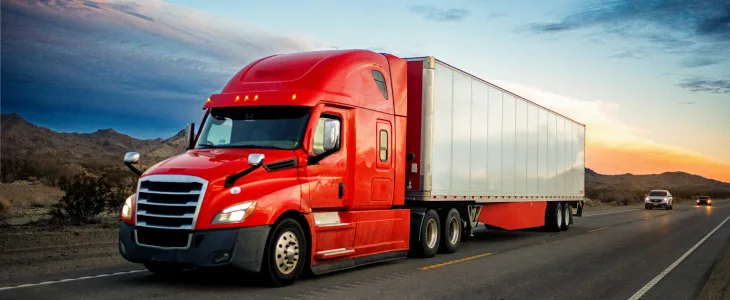
There has been a sharp increase in large truck traffic across New Jersey, contributing to a troubling rise in serious and fatal crashes. When commercial truck drivers speed, the size and weight of their vehicles make collisions more devastating. These accidents often lead to catastrophic injuries or wrongful death, especially on highways in densely traveled counties like Essex and Morris. Victims and their families may be entitled to compensation when truck driver negligence—particularly excessive speed—contributes to a preventable crash.
Why Victims of Speeding Truck Accidents Choose Nagel Rice LLP
Speeding truck accident claims require immediate investigation, technical insight, and a firm that can stand up to trucking companies and their insurers.
Clients turn to Nagel Rice LLP because:
- We have decades of experience litigating truck accident claims across New Jersey
- We understand how to uncover driver and employer negligence
- We consult with accident reconstruction experts to prove fault and impact
- We’ve secured substantial verdicts and settlements in complex injury cases
If you were injured in a speeding truck accident, contact Nagel Rice today for a free consultation.
Why Are Trucks Traveling Faster on New Jersey Roads?
Several factors have contributed to the rise in commercial truck traffic—and with it, the frequency of speeding-related accidents:
- Economic growth has led to increased freight transport throughout the region
- The rise of e-commerce has created pressure for faster delivery timelines, particularly through Amazon, FedEx, and other distribution networks
- Infrastructure and construction projects across Essex, Morris, and surrounding counties have added to commercial vehicle activity
- Driver shortages and overworked routes push some drivers to speed to stay on schedule
Despite strict federal and state speed regulations, commercial truck drivers often face unrealistic deadlines and limited enforcement—creating serious risks for other motorists.
Why Do Truck Drivers Speed?
Commercial truck drivers may be more likely to speed due to a mix of financial, logistical, and psychological pressure:
- They are often paid by the mile or per delivery, incentivizing faster travel
- Tight delivery windows or company expectations may push them to exceed speed limits
- Many drive for long hours with inadequate rest, eager to finish their shifts
- Spotty traffic enforcement on rural routes or at night may encourage risky behavior
Regardless of the reasons, speeding in an 80,000-pound vehicle is reckless—and when it causes injuries, the driver and employer should be held accountable.
Why Speeding Trucks Are Especially Dangerous
Speeding is dangerous in any vehicle—but the risks are magnified in large commercial trucks:
- Longer stopping distances: Trucks require significantly more time to stop, especially at higher speeds
- Increased impact force: The weight and speed of a truck greatly amplify the severity of a crash
- Reduced maneuverability: High speeds limit a driver’s ability to steer or correct in time
- Higher risk of rollover or jackknife: Fast speeds destabilize trailers, particularly during sudden stops or turns
- Underride hazards: Passenger cars can become trapped beneath speeding trucks in high-impact crashes
These dangers are why speeding is a leading cause of serious injury and fatal truck accidents in New Jersey.
Who Can Be Held Liable in a Speeding Truck Crash?
While the truck driver is usually the most visible party, several others may share legal responsibility for a speeding-related accident:
- The trucking company may be liable for:
- Failing to train or supervise the driver
- Encouraging or tolerating unsafe delivery schedules
- Ignoring prior safety violations or speeding complaints
- A shipping company or broker may have imposed unrealistic transit timelines
- A maintenance provider or manufacturer may be partially liable if brake failure or steering defects worsened the outcome
- Government agencies may be responsible if poor signage or road conditions contributed to the crash
Our experienced speeding truck accident lawyer will investigate every angle of liability and pursue compensation from all responsible parties.
How We Build Your Speeding Truck Accident Case
At Nagel Rice, we move quickly to protect our clients after a serious crash. Our process includes:
- Investigating the scene and obtaining police reports
- Preserving dashcam and black box (EDR) data from the truck
- Requesting driver logs and employment records
- Consulting with accident reconstruction experts and medical professionals
- Documenting your injuries, treatment, and financial losses
- Preparing your case for trial if a fair settlement isn’t offered
Let us build the strongest possible case for compensation—so you can focus on recovery.
Talk to a New Jersey Truck Accident Lawyer Today
Speeding trucks leave a trail of devastation in their wake—and victims should not have to bear the burden alone. At Nagel Rice, we help injured clients and grieving families in Essex and Morris Counties, and throughout New Jersey, hold truck drivers and companies accountable. If you or a loved one was hurt in a speeding truck accident, our attorneys are here to fight for justice and full compensation.
Contact us today for a free consultation. We charge no fees unless we win your case.
Frequently Asked Questions
Can I still file a claim if the truck driver was not issued a speeding ticket?
Yes. A speeding ticket can help your case, but it’s not required. An attorney can use black box data, witness statements, and accident reconstruction to show that speeding contributed to the crash—even without a citation.
Are trucking companies liable if their drivers speed?
Often, yes. If the company pressured the driver with unrealistic deadlines, failed to monitor safety violations, or ignored previous speeding incidents, it may be held liable for negligent supervision or unsafe policies.
How soon should I contact a lawyer after a speeding truck accident?
As soon as possible. Early legal help ensures critical evidence—like driver logs and black box data—is preserved before it’s lost or destroyed. An attorney can also deal with insurers and begin building your case immediately.